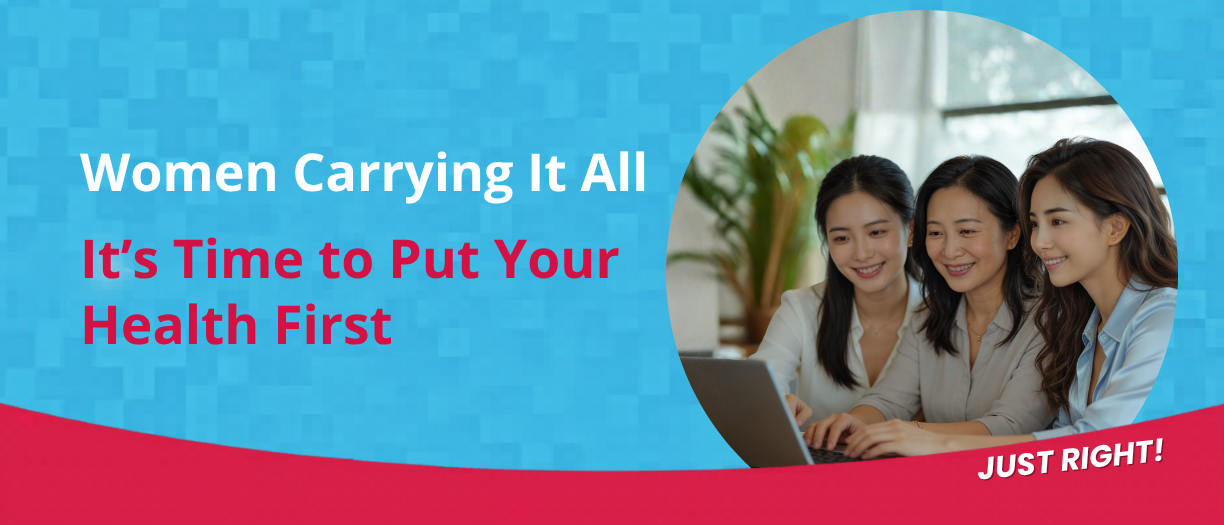
Women Who Carry the Most, Often Put Their Health Last.
When your period becomes irregular or you feel a dull ache in your lower abdomen — Is it really just because you’re busy or tired?
Many women have been there.
You don’t feel quite right, but you tell yourself, “I’ll deal with it after this busy period.”
Your body feels off, yet you push through — because your family, your job, and everyone around you still needs you.
A sudden irregular cycle, heavier-than-usual flow, or more noticeable lower abdominal pain are often brushed aside as stress, lack of sleep, or fatigue. And so the delay continues.
But in reality, your body may already be sending you a signal.
In Hong Kong and globally, many women experience gynaecological health issues such as:
Uterine Fibroid
- Uterine fibroids are very common and mostly unharmful: up to 70-80% of women may develop them
- Uterine fibroids are non-cancerous growths of muscle and connective tissue that develop in or around the uterus and may be diagnosed by Ultrasound.
- Only about 25% of women will have severe symptoms including significantly heavier menstrual flow, prolonged periods, abdominal pain, and/or fertility related issues that require treatment.
- One of the most common treatments offered is a Hysterectomy or Myomectomy (both are surgical procedures), yet conservative treatments exist, including insertion of Intrauterine Devices (IUDs), hormonal treatment, embolization and more.
- Don’t rush for surgery before assessing all your options! Leading medical research reported that 60% of women who underwent surgery were not offered a less invasive (see examples above or in some cases, life style changes and dietary changes) and often successful treatment first.
OUR TIP TO YOU
Unlike fibroids or ovarian cysts, endometriosis is rarely a “do nothing” condition. The failure is not overtreatment, it is delayed diagnosis, fragmented care, and inconsistent treatment strategy. Choose your expert specialist carefully. Endometriosis is a chronic condition, early referral to a specialist is important to develop and implement an effective treatment strategy and guide ongoing care.
LET US SUPPORT YOU IN MAKING THE RIGHT DECISION
Blue Cross - See a Doctor
Ovarian Cysts (hyperlink to the source)
- 20% of women will at some point be diagnosed with an Ovarian Cyst. These are fluid-filled sacs on or in an ovary, often forming during the menstrual cycle (functional cysts).
- Most are incidental findings and 70-80% will resolve on their own, but persistent growing cysts, complex or suspicious looking or those causing pain, require medical & specialist follow-up.
- Cysts under 5cm usually do not require treatment. For 5-7cm cysts repeat imaging by Ultrasound and specialist follow up is required. For Cysts above 7cm, MRI and surgery might be considered.
- Most symptomatic cases may be managed with hormonal treatment (helps them disappear faster and helps avoid them growing more) along with temporary pain medication (till the cysts resolves - about 8 weeks)
OUR TIP TO YOU
A simple Ovarian Cyst is usually not a condition requiring treatment. It is often an incidental and temporary finding. Consult with a specialist and choose your approach carefully.
LET US SUPPORT YOU IN MAKING THE RIGHT DECISION
Blue Cross - See a Doctor
Endometriosis
- Endometriosis is a condition where tissue similar to the lining of the uterus grows outside the uterus, causing pain and sometimes fertility problems. It affects about 10% of women at reproductive age.
- Up to 50% of women diagnosed with endometriosis will suffer from pelvic pain and between 30-50% might have fertility concerns. Some may have very heavy / very painful menstruations, and some will feel pain during intercourse.
- Unfortunately, endometriosis diagnoses are often delayed and take between 7 to years. Often it is misdiagnosed as irritable bowel syndrome (IBS), stress or functional pain.
- Most diagnosed women will require treatment, which may vary in intensity, from medication (combined contraceptive pills, progesterone only or GnRH. Certain cases may require surgery (which mostly helps but does not cure).
- Underdiagnosis is the bigger problem here, yet overtreatment may exist, specifically repeat surgeries with known minimal effect. It is crucial to find a highly experienced specialist in managing endometriosis and consider all treatment approaches for best outcomes.
OUR TIP TO YOU
Unlike fibroids or ovarian cysts, endometriosis is rarely a “do nothing” condition. The failure is not overtreatment, it is delayed diagnosis, fragmented care, and inconsistent treatment strategy. Choose your expert specialist carefully. Endometriosis is a chronic condition, early referral to a specialist is important to develop and implement an effective treatment strategy and guide ongoing care.
LET US SUPPORT YOU IN MAKING THE RIGHT DECISION
Blue Cross - See a Doctor
Preventive and Lifestyle Health:
preventive and lifestyle health underpins all other pillars. Nutrition, physical activity, sleep, stress management and early health awareness are critical, but often deprioritised.
Here is some useful data to help you improve your lifestyle for better medical outcomes:
- Physical exercise: women are consistently less active than men.
- Nutrition: Over 50% of calories come from processed foods; Visceral fat has consistently been increasing in women over 40.
- Stress: Women suffer from higher levels of chronic stress and anxiety than men, which is linked to weight gain, insulin resistance and increased inflammation markers.
- Sleep: 1 in 3 have inadequate sleeping patterns, leading to impaired hormonal cycles, obesity, diabetes, hypertension and cardiac diseases.
Women’s Health is Not a Moment; it is a Lifelong Journey
With the right support, it becomes an opportunity: to make better decisions, achieve better outcomes, and build a healthier, more resilient future.
While many women put themselves last, remind your mom and yourself:
“Health deserves to come first, too.”